









Music Career Finder

Start Here:

1. 1. Are you a Musician/Performer or are you just looking for a career in the Music Business? *This question is required.
2. 2. What are you most interested in? Select as many as you like. *This question is required.
Female DJ using mixer during live DJ set

DJ

Asian female singer in studio with mic

Singer

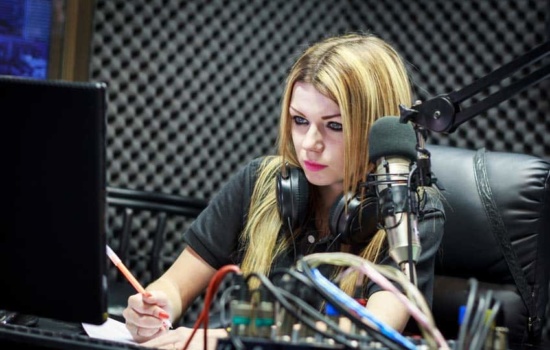
Music Director with headphones around her neck in the on-air studio at the radio station

Music Director

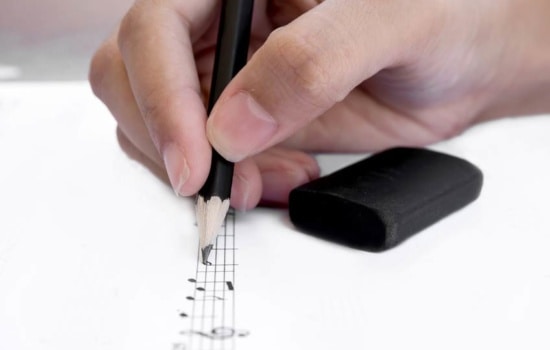
Closeup on an Orchestrator's hand writing notes on sheet music

Orchestrator

Young Black male Drummer playing the drums

Drummer

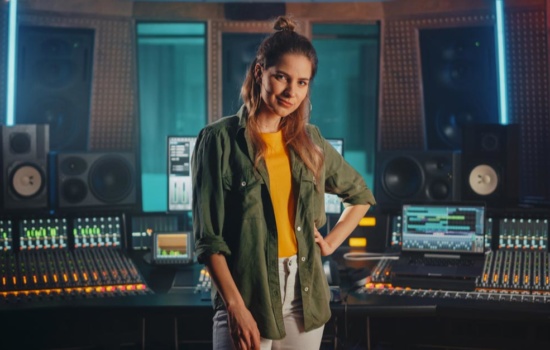
Young female Audio Engineer with soundboard in recording studio

Audio Engineer

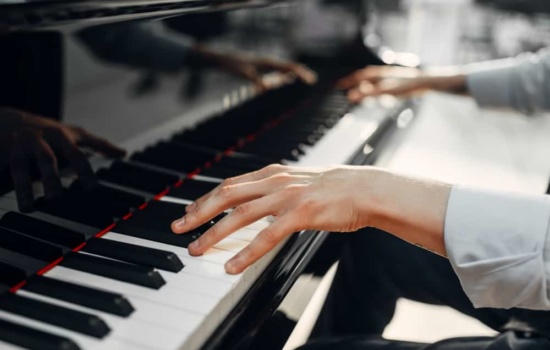
Young female Pianist at piano

Pianist

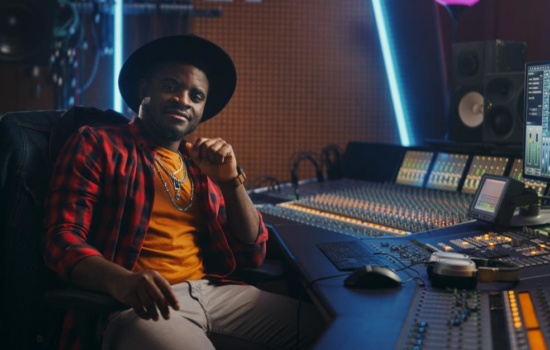
Young black male Music Producer in recording studio

Music Producer

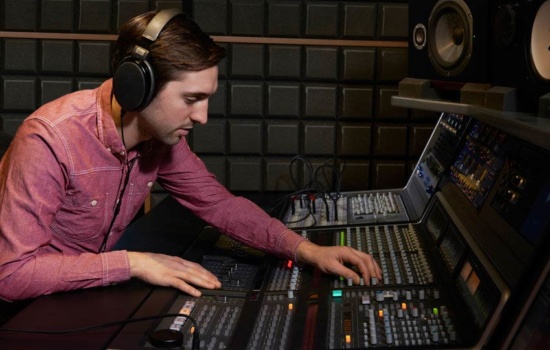
Mastering engineer using mixing console in recording studio

Mastering Engineer

Record Producers working in a music studio

Record Producer

Female Guitarist in recording studio

Guitarist

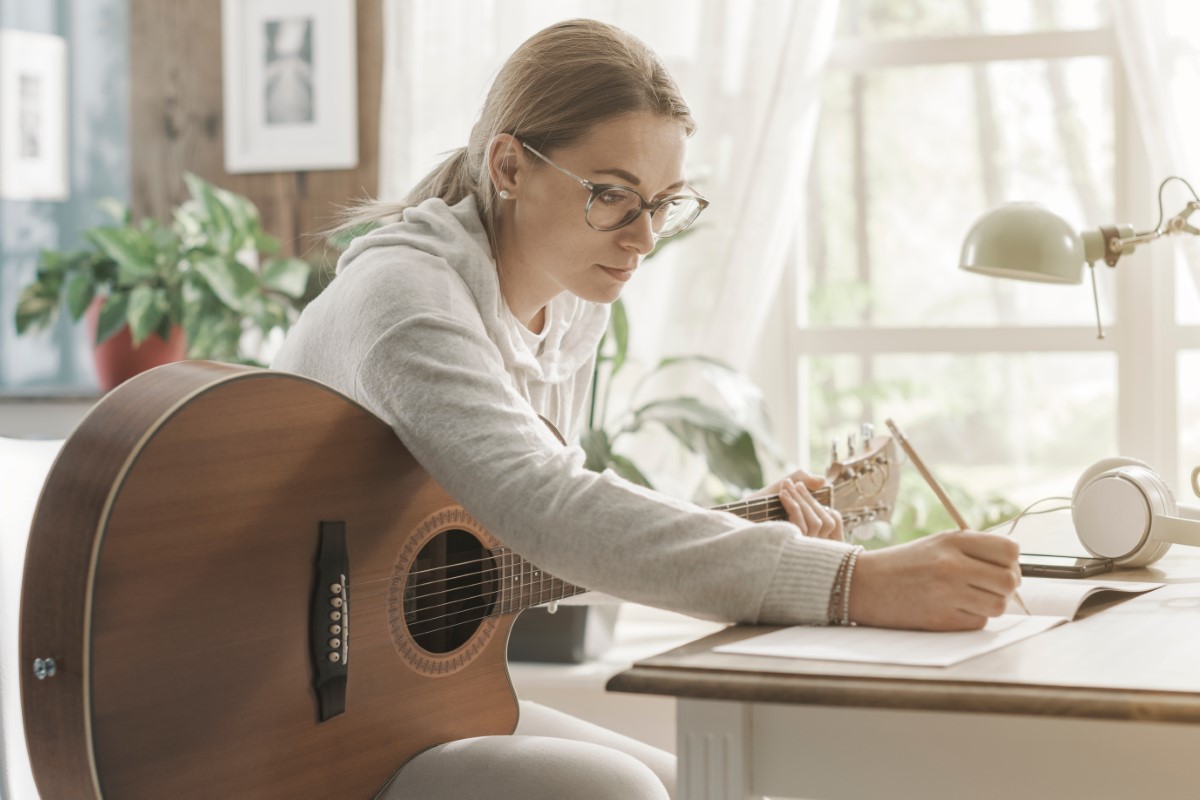
Songwriter with acoustic guitar writing lyrics in notebook

Songwriter

Lyricist listening to music and writing ideas in her notebook

Lyricist

Ceiling of opera theatre with crowd taking their seats

Opera Singer

Personal Manager in the recording studio with the band he manages

Personal Manager

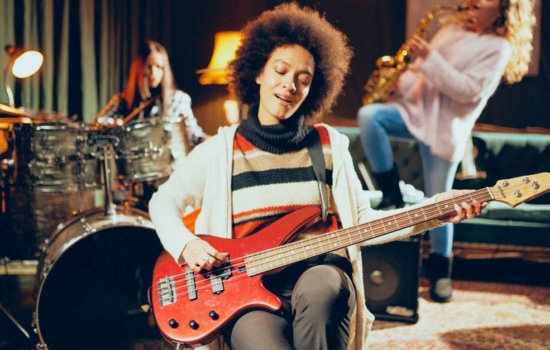
Young female Bassist with her band

Bassist

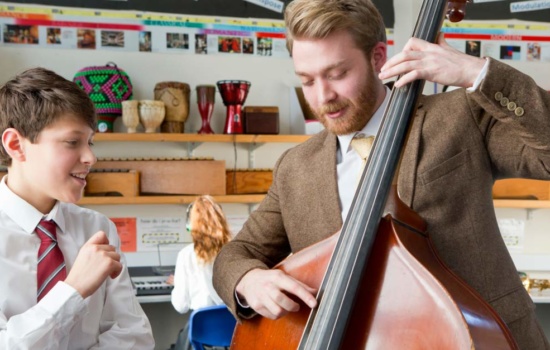
Music Teacher showing bass to young male music student

Music Teacher

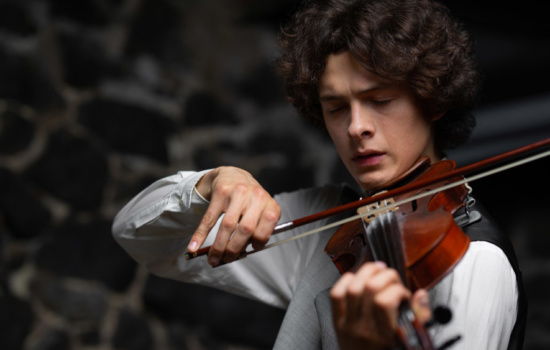
Concertmaster playing his violin

Concertmaster

Close up on a Composer's hands playing the piano

Composer

Director of A&R wearing headphones

Director of A&R

Learning to compose music takes a lot of skill, time, and effort, and builds on solid musicianship.

Anyone can learn to compose if they are willing to apply themselves. It takes a commitment to doing the work to learn, along with some trial and error.

Songwriters are also Composers, and there are as many different ways to write songs and compose music as there are people doing it. The trick is to find out what techniques work best for you. The more you practice and study music, the better Composer you will become.

Keep reading to find out what music composition is, why people compose music and how you can learn to do it too.

Why Compose Music?

People want to compose music for all kinds of reasons: for money, fame, artistic fulfillment, and fun. Maybe you want to impress your friends, family, or classmates. Maybe you want to live forever in posterity through your music. Or maybe you just love music and composing.

History is replete with fine composers, and for every famous composer there were perhaps thousands who toiled away in relative obscurity. If you’ve ever wondered what it takes to create new music, write songs, and compose music for films or videogames, this article is for you.

Is composing music hard?

Tom Stein

However you look at it, composing new music is grueling hard work. It requires musical skills to create new compositions. This doesn’t necessarily mean you must be trained in every aspect of music making, but it helps to play an instrument well and to have the experience and skills to either write your music down, or create professional quality recordings, sometimes called demos. Being musically literate and tech savvy will definitely help you as a Composer.

It’s rare to find Composers who do not play any instrument well. This means that if you’re serious about becoming a Composer you should at first focus on learning a musical instrument. Many composers prefer the piano because the linear nature of the keyboard allows them to “see” the notes in a graphic way, but there are plenty of examples throughout history of composers playing other instruments, or even being multi-instrumentalists. The better you are at music, the more natural it should be for you to compose music.

Here’s a tutorial for beginners on how to get started with writing music:
What is Music Composition?

Music Composition is the creation of new works or pieces of music. Compositions can be for vocal or instrumental music. Composers who write songs are called Songwriters and the people who write the words are called Lyricists.

In Western traditions, such as with Classical music, the Composer usually writes musical notes on a score, while pop Songwriters usually write a lead sheet showing chords and melody.

Sometimes, such as with Jazz or Rock music, the recordings are the main product of the Composer. Music can be notated or recorded by a computer.

More than one Composer can work on a single piece; although unusual with Classical music, this is a common practice with modern popular music. Composers create new music for a wide range of uses, from listening or dancing, to films, videogames, the theater, advertising, and TV.

Some well-known Composers composed music for church services, sometimes called liturgical music. At its core, Composing involves the ordering and structuring of sounds together in a work of sonic art, which may or may not be designed to accompany visual images.

Hey, what do you think about trying our new Music Career HelperMusic Career Helper really quick? It’s totally free and could help get your career moving fast! Give it a try. It’s totally free and you have nothing to lose.

Can Anyone Learn To Be A Composer?

There are many different kinds of composers. There are composers of Classical music and Jazz, music for films and videogames, TV shows, advertising (jingles), the theater, and music for meditation or healing. Songwriters are also composers. Anywhere you hear music, someone had to compose and record it.

There are many ways to compose music, using various tools, digital and otherwise. To learn to compose, it will help to study and know the basics of Music Theory, and to play an instrument well. Most composers know how to use music technology tools, such as a Digital Audio Workstation (DAW) and the attendant software, peripherals, and plugins.

Some people think composing is mysterious, because they don’t understand the process. They think some kind of magical genius is required, but it’s really more about being persistent, diligent, and methodical in your work. Most composers develop their own way of working and stick to it, while others may continually experiment with new and different methods.

If you are willing to put in the time and effort to acquire the tools, and can grasp the various ways music is put together, you might already have the makings of a composer.

What skills do composers need?

Tom Stein

Playing an instrument well is a prerequisite, as mentioned previously. Another important skill is transcription, the ability to write down the music you hear. This definitely takes practice. Transcribing involves identifying rhythms, single notes (melodies, scales), and harmony (chords) and knowing how to write them down. Writing and reading music is required for most kinds of composing.

Another useful skill for composers is fluency with recording software, sequencers, and recording equipment, to make recordings so we can “hear” how the music sounds. Recordings can also help to protect ownership through securing copyrights. If the goal is to earn money from your music, you’ll also need music business knowledge and skills, such as how to register and license your works to get income from royalty payments.

It’s also important to have an understanding of Music Theory. One way to acquire all these skills relatively quickly is to attend music school, where students receive specialized training in all aspects of musical performance and composition as well as music business.

How Do I Start?

Every composer starts out staring at a blank sheet of paper (or a computer screen). It’s like the artist staring at a blank canvas, or the author sitting down to write.

Some composers start with an idea, or a concept, musical or otherwise. Others might start with a chord progression or by writing melodies. Some might create a theme, or work with several motifs. EDM or Hip-Hop composers might use beats and loops or samples.

Still others might focus initially on a rhythmic pattern or drums and bass groove. Or work to create a certain mood, such as when writing music for a videogame of film. Or start with a title. Or a “riff” on the guitar. There’s no one way to do it. Whatever works for you, will work.

Here’s a beginner’s guide to composing music for videogames:

You might have melodies swirling around in your head. The trick is to capture those melodies by either writing them down or recording them (or both). Putting notes on a staff, using a music sequencer, or using notation software are all fine, whichever comes easiest to you.

Next steps would be to add harmony and counterpoint, drones or bass notes, and to consider instrumentation. You might favor strings, brass instruments, reeds, percussion, guitar, and piano. Different instruments offer different colors; think of it like the artist’s palette.

Using repetition is also a favorite technique of composers. Bringing back motifs in a slightly different iteration, or blending with a new motif can be very effective in creating a mood.

Recording can be done by entering notes into a recording software program (e.g., Logic Pro X or Cubase) using a DAW, or by singing or playing into a microphone and recording device.

To claim ownership of a composition, the music must be “fixed” into one medium or another. In other words, it has to be written down or recorded, so that it can also be published and licensed. That is, if you want to earn money from your compositions. Music that hasn’t been written down or recorded cannot be protected.

Ultimately, you need an idea and some inspiration to get started with composing a piece of music. It’s like sitting down to write a story; you need to begin with some idea of what it’s about in your mind.

Here’s some info on how to get started with composing, including finding the inspiration and ideas:

What Happens Next?

Now that you’ve found an idea, have your inspiration, have some thematic ideas, motifs, or decided on the mood you want to create, you will need to make other important decisions about your composition.

If you’re a songwriter, you might have lyrics and a melody but need chords. Experimenting at the piano or playing guitar could be the way to move forward. Maybe you have chords and need to write a melody. You can decide about the form by having verses, a chorus, refrain, or other sections.

Much of the composing process can be described as additive. You are adding and developing new motifs, or adding harmony or lyrics to an existing melody. You could be adding a counter-line, new instruments, or digital processing effects (FX). You could be adding cadences, to bring more dissonance, to add some tension which will lead to a resolution.

You start with a bare-bones idea and build it out from there. Composers use lots of techniques to add all the parts of a composition together so that the whole is greater than the sum of its parts. The deeper you go into learning the subject, the more “tricks” you will learn to make your music really shine.

Maestro Rick Beato explains cadences and how to create emotion in composing music:

Here’s an explanation of how tension and release create interest in music compositions, including 5 different techniques to do so:

Should I Get A Teacher?

To learn the basics of music theory and playing an instrument, it’s probably wise to take some lessons from a qualified teacher, or attend music school. There are also teachers who teach composition privately to students. Most successful composers had the benefit of studying with great teachers who could also act as role models.

When you’ve got the basics of music under your belt, working with a teacher who is a successful composer is the best option. They can introduce you to their professional network and help you to get commissions when you are ready. You will have the opportunity to observe their working methods and learn the tricks of the trade. You can be inspired by their unbridled creativity.

Depending on where you live, it might not be so easy to find a teacher. Remote learning is second-best, but could be an option.

What is the best way to compose music?

Tom Stein

The answer here depends on the style or genre of music you wish to compose. For example, composing popular songs usually means finding a group of chords that work well together, writing catchy melodies with lyrics, and then creating sections such as verses, a pre-chorus, and a chorus. Or maybe, writing the melody with lyrics first, and then finding the right chords to fit. Songwriters, who are also composers, might start out with a basic concept for a song based on a subject (e.g., unrequited love), or by working from a title, a bass line, or a drum groove.

For Composers of instrumental music, Jazz, or Classical, they might start with a blank sheet of score paper and then begin writing the notes of their composition down on the paper. Or they might start on a computer, using sequencing or notation software such as Logic Pro X or Sibelius, respectively. Some Composers create their musical compositions playing a musical instrument and then write them down afterwards. There are as many ways to compose music as there are Composers doing it.

Can I Learn On My Own?

There are lots of helpful videos online which can teach you about composing. You just need to be motivated enough to search for and find them. Many claim to teach you how to start from the very beginning, though they typically assume that you have some level of musical knowledge and training.

Here’s a sample tutorial for beginners from Composing Academy:

There are online courses you can take, and even free MOOCs (Massive Open Online Courses) from famous colleges and universities that are excellent. There are also some good books you can read, software, and apps to help you learn. There’s no shortage of high-quality learning materials available, much of it for free.

However. Self-teaching does have a few potential pitfalls. If you’re the kind of person who learns well this way, that’s great, but not everyone does. The risk is that you can lose your momentum and initiative, and stop making progress. You can tire quickly, and there’s no one there to hold you accountable.

Another risk is that you end up with holes in your knowledge. No materials exist that are fully comprehensive and complete. By using a wide variety of materials, you will probably gain much useful knowledge, but not necessarily any real ability. You still have to apply your knowledge, which takes time and practice. Guidance from a professional could make a big difference in your learning progress.

Music is an endeavor which requires steady practice in order to make real progress. Book knowledge doesn’t always translate to capabilities. There are certain aspects of technical skill, working methods, and mental approaches to mastery which can only be learned from a true master. That’s why all of the composing greats studied with someone.

Every “expert” started out knowing nothing about their subject, and had to learn. In the beginning they copy those who came before, before they eventually spread their wings to fly. You can learn a lot studying music on your own. But there comes a time when a teacher is needed.

Especially after the beginning stage of learning composition, a teacher could be crucial in guiding you into learning new and different ways to deepen your knowledge and skill. You could also study arranging and music production in order to enhance your composing abilities.

Master musician and teacher Rick Beato shows how to develop musical ideas:

Getting Your Music Heard

It’s important to hear everything you’ve written. The preferred way has always been to have works played by live performing musicians, whether an orchestra, chamber group, choir, jazz combo, or rock band. The best place to have that happen is at music schools, who have the players available, sometimes organized into project bands dedicated to playing new music.

Today’s music technology also offers opportunities to hear what we’ve written, using samples, plugins, and a DAW with a sequencer. The digitally sampled sounds are very realistic, and most listeners can’t discern the computer-played example from actual musicians. Some of the software and plugins can be expensive, but hiring a live orchestra could cost much more.

Wrapping It All Up

Music is a democratic subject; everyone is equal when starting out. Music Composition is available to everyone. It’s up to each person to gain the necessary skills to excel at the art form. The more you know about music, the more quickly you can learn to compose.

If you’re really serious about becoming a Composer, learn music first. Learn all you can about music theory, music technology, and the business side of music, so you can record and protect your compositions or songs in order to get paid for them. Learn to play an instrument well, or how to sing.

While there’s a lot of info available online and in books for the self-taught, it’s a smart idea to find a teacher, if possible. You could also attend one of the excellent music schools that teaches composition. There are bachelor’s and master’s degrees available, and even doctorates in composing. To study composition at a music school you don’t always need to play an instrument expertly.

Most of all, don’t be afraid of composing. There’s nothing really mysterious about it, once you look under the hood and understand how it works. Finding inspiration and ideas might be the beginning, but the endpoint is beautiful music.

If you’re interested in composing music for film, watch this tutorial on writing cinematic music:

If you’re interested in learning to compose piano music at various levels of difficulty, here’s a short video on how to do it:

Here’s some general advice and tips for aspiring composers:

Site Search
We use cookies to understand how you use our site and to improve your experience. This includes personalizing content and advertising. By continuing to use our site, you accept our use of cookies, revised Privacy Policy and Terms of Use.